The short version
Dental floss is a small product with an annoying amount of chemistry hidden in it. The key distinction is PTFE, PFAS-free claims, and the actual fiber or coating material. The safest buying pattern is to prefer floss that clearly avoids PTFE, discloses fiber and wax materials, and does not rely on vague clean language alone.\n\nThis guide keeps the caveat visible: product listings are not lab tests. A floss can be a better pick because its materials are clearer, while still needing stronger evidence before anyone treats it as proven PFAS-free.
Why floss claims are different from cookware claims
Cookware often turns on the food-contact surface. Floss turns on fiber, glide coating, wax, flavor, and whether the product uses PTFE or another fluorinated material. A direct manufacturer statement is stronger than a marketplace bullet. Natural silk, polyester, vegetable wax, beeswax, and candelilla wax can be useful signals, but they do not replace source-backed PFAS language.
Stronger claim-based floss picks
These floss products have clearer material or manufacturer-source signals in the current review data. They are still presented with evidence labels because dental products are easy to overstate: the goal is lower uncertainty, not pretending every wax or fiber has been independently tested.
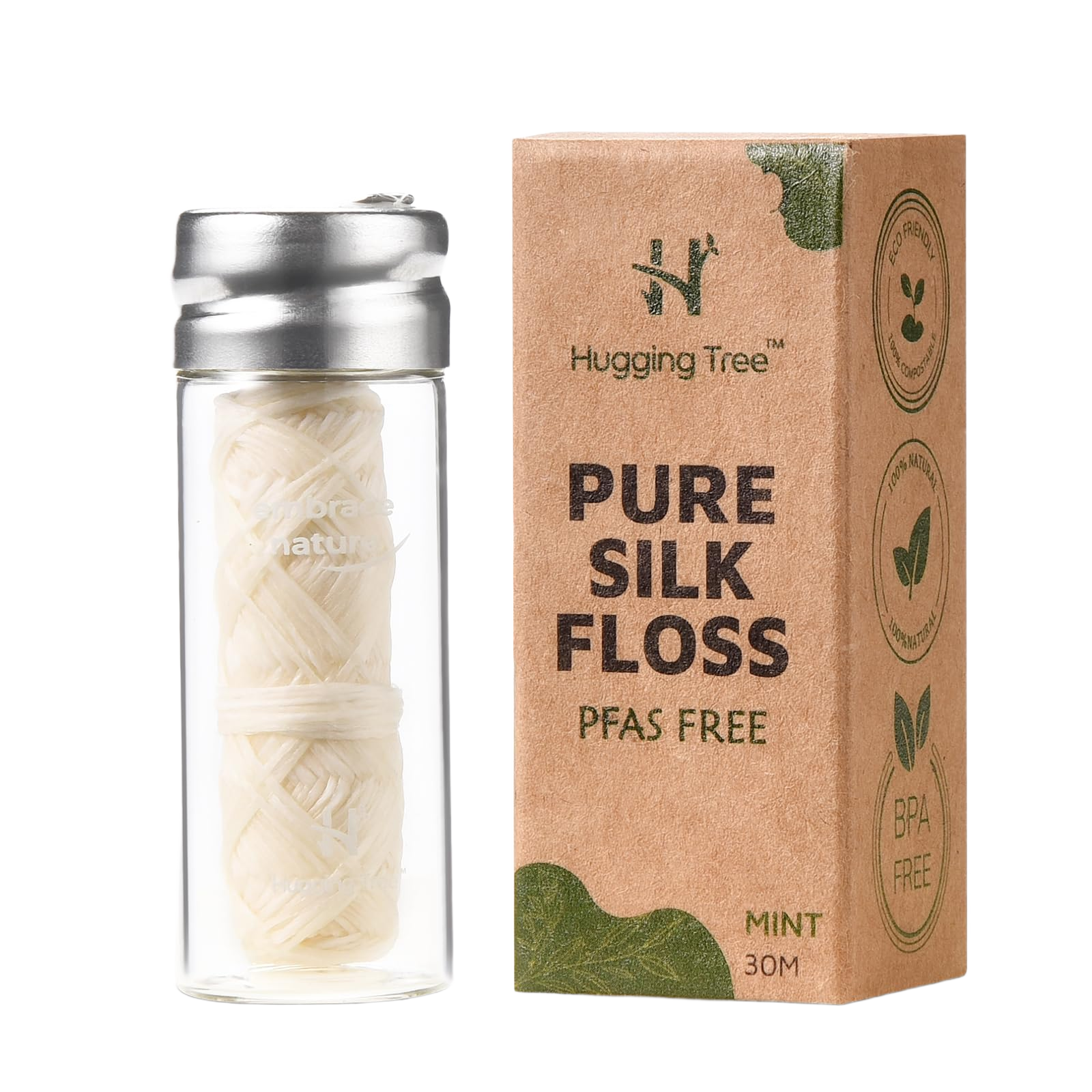 Hugging TreeNatural Silk Dental Floss with Glass Dispensernatural mulberry silk with candelilla waxBrand claim · 90%PFAS-free, PTFE-free, BPA-free silk floss coated with plant-based candelilla wax, zero-waste with glass dispenser.
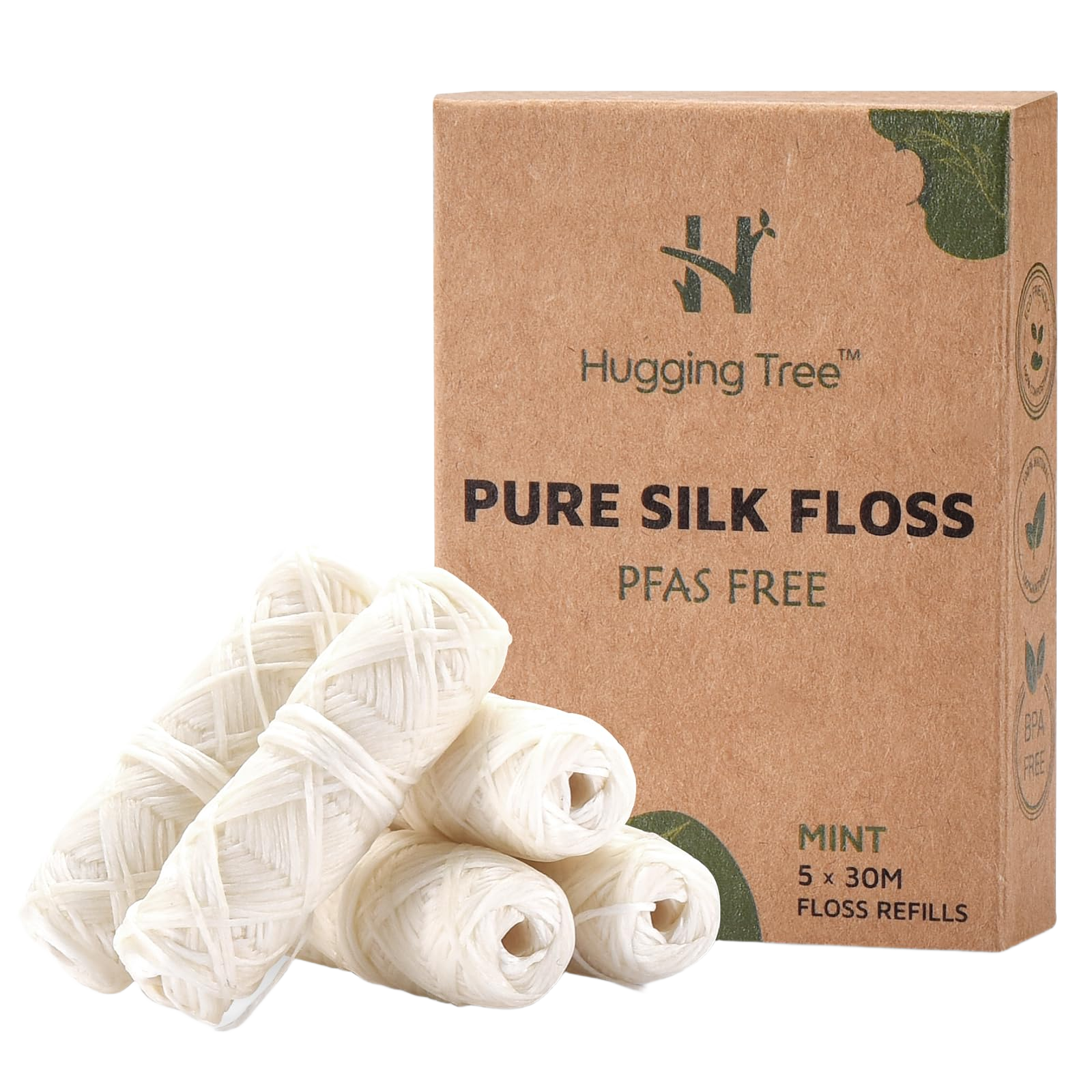 Hugging TreeNatural Silk Dental Floss Refillsmulberry silk with candelilla waxBrand claim · 90%PFAS-free silk dental floss made from natural mulberry silk coated with plant-based candelilla wax, explicitly PTFE-free and biodegradable.
What to avoid
Avoid treating glide, shred-resistant, or extra-slick as automatically bad or good. Those are performance terms. Look for the actual fiber and coating. Be especially skeptical of products that only say non-toxic, clean, or eco without naming the material. If a product says PFOA-free but does not address PTFE or broader PFAS, treat the claim as incomplete.
How TheUncoated ranks floss
The ranking favors manufacturer-source claims, explicit PTFE-free or PFAS-free language, disclosed fiber and wax materials, source count, and low PFAS risk. It demotes vague claims, missing evidence, and products where the category or coating is unclear.
Questions
Is PTFE-free floss the same as PFAS-free floss?
Not exactly. PTFE is one fluoropolymer associated with the PFAS family. A PTFE-free claim is useful, but a broader PFAS-free claim or clear material disclosure is stronger.
Is silk floss automatically PFAS-free?
Silk is a lower-risk material signal, but the wax, flavor, coating, and brand claim still matter. TheUncoated treats silk as useful material evidence, not a lab result.
Should I stop flossing because of PFAS concerns?
No. Oral hygiene still matters. The practical move is choosing floss with clearer material and coating claims if you want to reduce uncertainty.