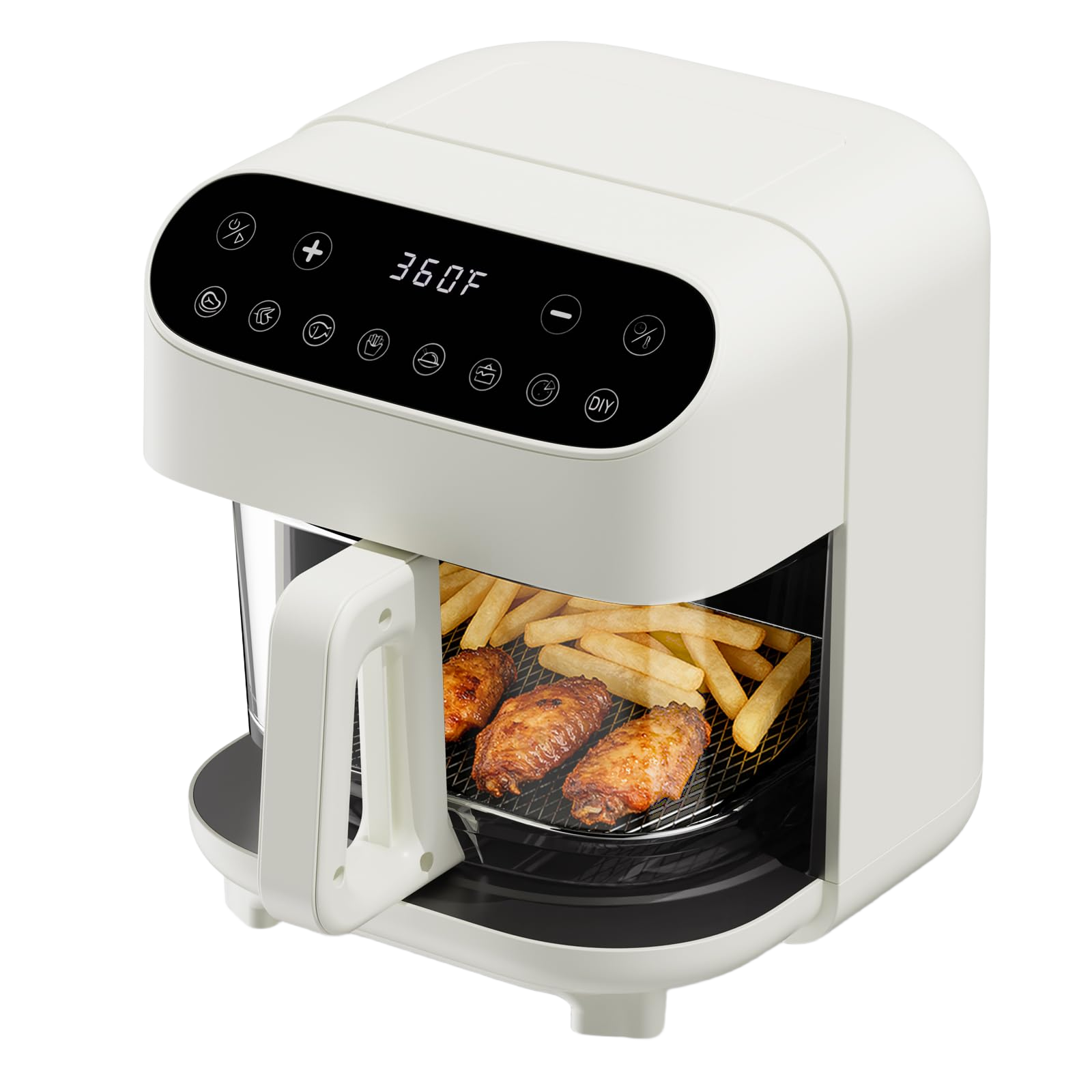
The Search for PFAS-Free Air Fryers
Air fryers have become a kitchen staple for their ability to deliver crispy results with less oil. However, concerns about per- and polyfluoroalkyl substances (PFAS) in non-stick coatings have led many consumers to seek safer alternatives. PFAS are a group of chemicals associated with various health concerns and environmental persistence. While many traditional air fryer baskets use PTFE (a type of PFAS, commonly known as Teflon) for its non-stick properties, a growing number of manufacturers are offering PFAS-free options. This guide will help you navigate the market to find air fryers that prioritize your health and the environment by avoiding these 'forever chemicals'. We'll focus on models that utilize materials like glass, stainless steel, or independently verified PFAS-free ceramic coatings.
Understanding PFAS in Cookware
PFAS are a large family of man-made chemicals that have been used in various industrial and consumer products since the 1940s. Their resistance to heat, oil, stains, and water makes them useful in non-stick cookware, including many air fryer baskets. However, these chemicals can migrate into food, especially when cookware is scratched or heated to high temperatures. The U.S. Food and Drug Administration (FDA) has acknowledged authorized uses of PFAS in food contact applications, but growing scientific evidence has raised concerns about their potential health impacts. The Environmental Protection Agency (EPA) has also published toxicity assessments for certain PFAS compounds. When an air fryer claims to be 'PFAS-free' or 'PTFE-free,' it indicates the manufacturer has opted for alternative materials to achieve non-stick properties or has designed the cooking surface to be inherently non-stick without such coatings, like glass or stainless steel. It's crucial to look for clear evidence supporting these claims, as some ceramic coatings, while often marketed as 'green,' may still contain other chemicals that are not fully understood or tested for long-term safety. The Washington State Department of Health and Department of Ecology provide useful information on PFAS in consumer products and cookware, highlighting the importance of informed choices.
Best Overall PFAS-Free Air Fryer
The Havato 5 Quart Glass Air Fryer stands out for its commitment to truly non-toxic cooking. Its primary cooking basket is made from high borosilicate glass, eliminating any concerns about PFAS, PTFE, or other chemical coatings. The internal grill rack is constructed from 304 stainless steel, further ensuring food contact surfaces are free from harmful substances. This design choice provides peace of mind, as glass is an inert material that won't leach chemicals into your food, even at high temperatures. The transparency of the glass basket also allows for easy monitoring of your food's cooking progress without needing to open the drawer and release heat. Both the glass basket and stainless steel rack are dishwasher-safe, simplifying cleanup. This model is frequently highlighted in reviews focusing on non-toxic kitchen appliances, affirming its status as a top choice for health-conscious consumers.
The Challenge of Ceramic Coatings
While ceramic-coated air fryers are often marketed as PFAS-free, it's important to understand the nuances. Many ceramic coatings are indeed free of PTFE and PFOA, which are specific types of PFAS. However, the term 'ceramic' can be broad, and the exact composition of these coatings can vary. Some ceramic coatings may use nanoparticles or other proprietary blends whose long-term effects are not as thoroughly studied as traditional non-stick chemicals. When considering a ceramic-coated air fryer, look for manufacturers who are transparent about their materials and ideally, provide third-party certifications or detailed information regarding the safety and composition of their coatings. Without this, a 'PFAS-free' ceramic claim might only refer to the absence of specific PFAS compounds, not a guarantee of complete inertness or safety from all synthetic chemicals. Always prioritize products that explicitly state 'PTFE-free' and 'PFOA-free' in addition to 'PFAS-free' for maximum clarity.
Best Large Capacity PFAS-Free Air Fryer
For families or those who frequently cook larger meals, the Granitestone 16Qt Large Glass Air Fryer offers a substantial cooking capacity without compromising on safety. This model features a generously sized borosilicate glass bowl, ensuring that your food only comes into contact with inert, non-toxic material. The internal cooking racks are made from stainless steel, further solidifying its PFAS-free credentials. Granitestone explicitly states that this air fryer is Teflon-free and PFAS-free, providing reassurance for health-conscious users. The glass bowl not only eliminates concerns about chemical leaching but also allows for full visibility of the cooking process, similar to a traditional oven but with the efficiency of an air fryer. Cleanup is also made easy with dishwasher-safe parts and a self-cleaning function. While the lid may contain some plastic components, these are not intended for food contact during the cooking process, maintaining the integrity of the food-contact surfaces.
Best PFAS-Free Ceramic Coated Air Fryer
The Cosori Iconic Stainless Steel 6.5 Qt Smart Air Fryer presents a compelling option for those seeking a PFAS-free ceramic-coated air fryer. Cosori consistently claims that the ceramic coating on its stainless steel basket is PFAS-free, and they have actively promoted this feature across their brand sites and press releases. The air fryer combines a durable stainless steel body with a nonstick ceramic-coated basket, aiming to offer the convenience of non-stick without the concerns associated with traditional PTFE coatings. While Cosori's claims are strong, it's important to note that, like many ceramic-coated products, independent third-party verification of the coating's exact composition and long-term inertness beyond specific PFAS compounds is not always readily available. However, for consumers prioritizing a ceramic non-stick experience with explicit manufacturer assurances against PFAS, this model is a strong contender. It also features dishwasher-safe parts and comes with a 5-year warranty, indicating confidence in its durability.
Practical Shopping Rules for PFAS-Free Air Fryers
When shopping for a PFAS-free air fryer, keep these rules in mind to make an informed decision:
What to Avoid When Buying an Air Fryer
To truly ensure you're getting a PFAS-free air fryer, there are several things to avoid:
* **Air fryers with traditional non-stick coatings:** Unless explicitly stated as PTFE-free and PFAS-free by the manufacturer with supporting evidence, assume traditional non-stick coatings contain PFAS compounds. * **Vague 'non-toxic' claims without material specifics:** Some brands use marketing terms without clearly identifying the materials used in their non-stick surfaces. Always look for specific material disclosures like 'glass,' 'stainless steel,' or 'ceramic (PTFE-free)'. * **Products with mixed-material food contact parts:** Be wary of air fryers where the basket or racks have different materials for food contact, especially if one of them is a synthetic polymer or an unverified coating. For example, a stainless steel basket with a plastic liner or silicone inserts that come into direct contact with food can introduce other concerns. * **Claims of 'BPA-free' as proof of no microplastics:** While BPA-free is a positive, it doesn't guarantee the absence of other microplastics or synthetic polymers if plastic parts are in contact with food. Focus on glass or stainless steel for food contact to avoid plastic concerns entirely.
Uncertainty and Trade-offs in PFAS-Free Air Fryers
Navigating the PFAS-free air fryer market involves certain uncertainties and trade-offs. While glass and stainless steel options offer the highest confidence in being truly inert and chemical-free, they may come with their own considerations. Glass baskets, while transparent and safe, can be heavier and more fragile than coated metal baskets. Stainless steel, while durable, may require more effort to clean if food sticks, as it lacks the inherent non-stick properties of coatings.
For ceramic-coated air fryers, the main uncertainty lies in the proprietary nature of the coatings. While manufacturers claim them to be PFAS-free, the long-term safety and inertness of all components within these 'ceramic' formulations are not always fully disclosed or independently verified. Consumers must weigh the convenience of a non-stick surface against the desire for complete transparency regarding material composition. The trade-off often involves balancing ease of use with the highest level of material safety assurance. It's a personal decision based on individual comfort levels with manufacturer claims versus the irrefutable inertness of materials like glass.
Questions
What does PFAS-free mean for an air fryer?
PFAS-free means the air fryer's food-contact surfaces, particularly the basket or cooking tray, do not contain per- and polyfluoroalkyl substances. This includes common non-stick chemicals like PTFE (Teflon) and PFOA, which are types of PFAS. Manufacturers use alternative materials like glass, stainless steel, or specific ceramic coatings to achieve non-stick properties without these chemicals.
Are ceramic-coated air fryers truly PFAS-free?
Many ceramic-coated air fryers are marketed as PFAS-free, and they typically do not contain PTFE or PFOA. However, the term 'ceramic' can refer to a variety of formulations, and the exact chemical composition of some ceramic coatings may not be fully disclosed. While generally a safer alternative to traditional non-stick, it's best to look for brands that are transparent about their materials and ideally offer third-party certifications for their coatings to ensure they are free from all harmful substances.
Why should I choose a glass or stainless steel air fryer?
Glass and stainless steel are excellent choices for PFAS-free air fryers because they are inherently non-toxic and do not require any chemical coatings for their cooking surfaces. They are inert, meaning they won't leach chemicals into your food, even at high temperatures. These materials offer the highest level of confidence for chemical-free cooking, though stainless steel might require more effort to clean if food sticks, and glass can be heavier and more fragile.
Can I use aluminum foil in a PFAS-free air fryer?
Yes, you can generally use aluminum foil in PFAS-free air fryers, especially those with glass or stainless steel baskets. However, always ensure the foil doesn't block airflow, as this can affect cooking performance. Also, avoid highly acidic foods coming into direct contact with aluminum foil, as it can cause leaching of aluminum into food, regardless of the air fryer type.