Understanding PFAS in Your Water
Per- and polyfluoroalkyl substances (PFAS) are a group of synthetic chemicals found in a wide range of consumer products and industrial applications, leading to widespread environmental contamination, including drinking water sources. These 'forever chemicals' are persistent in the environment and the human body, raising significant health concerns. Protecting your household from PFAS exposure often involves filtering your drinking water. Two of the most effective and commonly used filtration methods are reverse osmosis (RO) and activated carbon filters. This guide will compare these two technologies, helping you understand their mechanisms, effectiveness, and practical implications for PFAS removal.
How Reverse Osmosis (RO) Filters Work for PFAS
Reverse osmosis systems work by forcing water through a semi-permeable membrane that has extremely small pores. This membrane effectively blocks contaminants larger than water molecules, including PFAS, heavy metals, dissolved solids, and many other pollutants. The process typically involves multiple stages, often including pre-filters (like sediment and carbon filters) to protect the RO membrane, and sometimes post-filters for taste improvement or remineralization. The EPA identifies RO as one of the most effective methods for removing PFAS from drinking water, achieving high reduction rates. However, RO systems are generally slower, produce wastewater, and can remove beneficial minerals, often requiring a remineralization stage. The effectiveness of RO in removing PFAS is well-documented, with studies showing high removal efficiencies for various PFAS compounds. The NSF/ANSI 58 standard specifically addresses reverse osmosis drinking water treatment systems, including their ability to reduce specific contaminants like PFAS. Look for certifications to this standard when evaluating RO systems for PFAS removal.
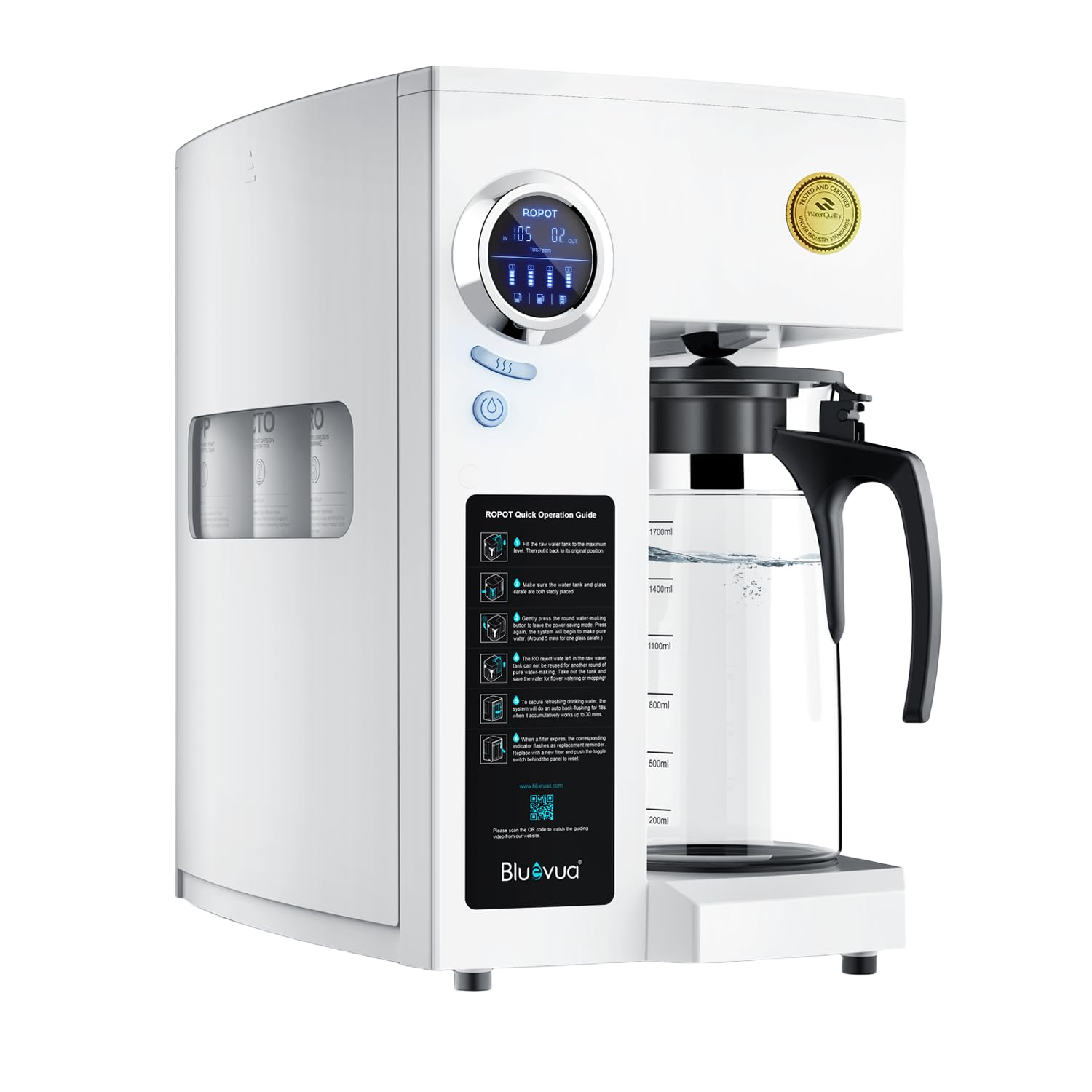
Top Pick: Countertop Reverse Osmosis System for PFAS
This Bluevua countertop reverse osmosis system offers a convenient, installation-free solution for PFAS reduction. Its high borosilicate glass carafe minimizes plastic contact with filtered water, addressing concerns about secondary plastic contamination. The system employs a 6-stage RO process, including UV sterilization and remineralization, and has been third-party tested for PFOA/PFOS reduction. Its portable design makes it suitable for renters or those who prefer not to modify their plumbing.
How Activated Carbon Filters Work for PFAS
Activated carbon filters, particularly carbon block filters, remove PFAS through a process called adsorption. As water passes through the carbon, PFAS molecules adhere to the porous surface of the carbon material. The effectiveness of activated carbon depends on several factors, including the type of carbon, contact time, and the specific PFAS compounds present. Granular activated carbon (GAC) and carbon block filters are both used, with carbon block filters generally offering superior performance due to their denser structure and increased surface area. While highly effective, carbon filters have a finite capacity for adsorption and must be replaced regularly to maintain performance. The EPA also recognizes activated carbon as an effective treatment technology for PFAS. For certification, look for NSF/ANSI Standard 53 (for health effects, including PFAS reduction) or NSF/ANSI Standard 401 (for emerging contaminants, which may include some PFAS).
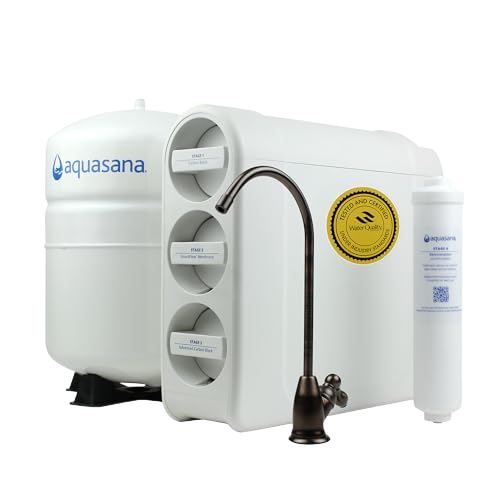
Certified Under-Sink RO System for Comprehensive PFAS Removal
The Aquasana SmartFlow Reverse Osmosis Water Filter is WQA certified to stringent NSF/ANSI standards, including 42, 53 (P473), 58, and 401, ensuring robust reduction of up to 99.99% of PFAS compounds, alongside many other contaminants. This under-sink system also includes a remineralization stage to restore healthy minerals to your water, improving taste. Its SmartFlow technology aims for efficient operation, making it a reliable choice for comprehensive water purification.
Replacement Filters with Natural Carbon for PFAS Reduction
These Waterdrop G2-2CFRO replacement filters are designed for Waterdrop G2 RO systems and incorporate natural coconut shell activated carbon blocks. This combination of activated carbon and a fine 0.0001 μm RO membrane is designed to effectively reduce a wide range of impurities, including PFAS. Opting for replacement filters that emphasize natural materials like coconut carbon can be a step towards reducing reliance on synthetic components in your filtration system.
Reverse Osmosis vs. Activated Carbon: A Direct Comparison for PFAS
When choosing between reverse osmosis and activated carbon for PFAS removal, consider these key differences:
Factors to Consider When Choosing Your PFAS Filter
Making an informed decision about your water filtration system involves weighing several practical aspects:
What to Avoid When Shopping for PFAS Filters
Navigating the market for PFAS filters can be challenging due to misleading claims. To ensure you're making a truly effective and safe choice, avoid these pitfalls:
* **Uncertified Products:** Filters without third-party certifications (like NSF/ANSI 53, 58, 401, or P473) for PFAS reduction may not perform as advertised. Certification provides assurance that a product has been tested to meet specific contaminant reduction claims. * **"BPA-Free" as a Sole Indicator of Safety:** While BPA-free is good, it doesn't guarantee the absence of other microplastics or harmful chemicals in filter components. Many plastic components, even if BPA-free, can still leach other substances. Focus on systems with minimal plastic contact with filtered water, especially for storage. * **Mixed-Material Products with Unverified Contact Parts:** Be wary of systems where critical food/water contact parts (lids, straws, gaskets, liners) are made of unverified plastics or silicones. These can introduce new contaminants, even if the primary filter is effective. Prioritize systems that are transparent about all material components. * **Over-reliance on Brand Claims Without Evidence:** Some manufacturers make claims about PFAS reduction without providing verifiable third-party test results or certifications. Always look for concrete evidence of performance. * **Ignoring Filter Replacement Schedules:** All filters have a finite lifespan. Neglecting to replace filters on time can lead to reduced effectiveness, and in some cases, a 'dumping' effect where previously adsorbed contaminants are released back into the water. Ensure you understand and commit to the maintenance schedule. * **Filters Claiming "PFAS-Free" Components Without Proof:** While a filter may reduce PFAS in water, claiming the filter components themselves are entirely PFAS-free requires robust evidence. Many synthetic materials can contain PFAS. Look for manufacturers that explicitly state and verify the absence of PFAS in their filter media and housing materials, or focus on materials with inherently low PFAS risk like glass or stainless steel for water contact. * **"Point-of-Use" Filters for Whole-House Solutions:** While effective for drinking water, point-of-use filters (like pitcher filters or under-sink systems) do not address PFAS exposure from other sources, such as showering or bathing. If whole-house protection is desired, a different, larger-scale solution may be needed.
Uncertainties and Tradeoffs
Choosing a PFAS water filter involves navigating several uncertainties and tradeoffs. While both RO and activated carbon are highly effective, neither is a perfect solution. RO systems, while offering superior contaminant removal, are known for their slow filtration rate, significant wastewater production, and the removal of beneficial minerals, which may necessitate a remineralization stage. The initial cost and ongoing filter replacement expenses can also be higher. Activated carbon filters, on the other hand, are generally more affordable and produce no wastewater, but their effectiveness can vary depending on the specific PFAS compounds and the filter's capacity. They also require regular replacement to prevent saturation and potential 'breakthrough' of contaminants. The sheer number of PFAS compounds (thousands) means that specific testing for every single one is impractical; certifications typically cover a representative subset. Furthermore, the long-term health effects of very low levels of PFAS exposure are still being studied, leading to evolving regulatory standards and recommendations. Consumers must balance filtration effectiveness, cost, maintenance, and environmental impact against their specific needs and concerns.
Practical Shopping Rules for PFAS Water Filters
To make the best choice for your household, follow these practical shopping rules:
1. **Prioritize Third-Party Certification:** Always look for filters certified by reputable organizations like NSF International, WQA, or IAPMO to standards like NSF/ANSI 53 (for activated carbon), 58 (for RO), or 401/P473 (for emerging contaminants including PFAS). These certifications ensure the product has been independently tested to reduce specific contaminants. 2. **Understand Your Water Quality:** If possible, get your water tested for PFAS and other contaminants. Knowing what's in your water can help you choose the most appropriate filtration method and ensure it targets your specific concerns. 3. **Consider System Type:** Decide between point-of-use (e.g., under-sink, countertop, pitcher) and point-of-entry (whole-house) systems based on your needs. For drinking water, point-of-use is typically sufficient and more cost-effective for PFAS removal. 4. **Evaluate Maintenance and Cost:** Factor in the cost and frequency of filter replacements. RO systems often have multiple filters that need periodic changing, while activated carbon filters also have a finite lifespan. Neglecting maintenance can compromise effectiveness. 5. **Check for Material Transparency:** Inquire about the materials used in all water-contacting components, especially for RO systems that often involve plastic reservoirs or tubing. Seek out systems that prioritize glass or stainless steel for filtered water storage to minimize potential plastic leaching. 6. **Assess Water Waste (for RO):** Be aware that RO systems produce wastewater. Look for systems with higher 'pure water to drain' ratios if water conservation is a concern. 7. **Read Reviews and Manufacturer Documentation:** Review user experiences and thoroughly read the manufacturer's performance data sheets to understand the filter's capabilities and limitations. 8. **Consider Remineralization:** If choosing an RO system, consider models that include a remineralization stage to add beneficial minerals back into the water for taste and health.
Questions
Can activated carbon filters completely remove PFAS?
Activated carbon filters, especially high-quality carbon block filters, can be very effective at reducing PFAS, often removing a high percentage of these chemicals. However, their effectiveness depends on the specific PFAS compounds, the concentration, and the filter's capacity. They do not remove 100% of all PFAS, and their efficiency decreases as the filter becomes saturated, requiring regular replacement. For comprehensive removal, RO systems are generally considered more effective.
Does reverse osmosis remove all PFAS?
Reverse osmosis systems are highly effective at removing a wide range of contaminants, including most PFAS compounds, often achieving over 90-99% reduction. The semi-permeable membrane in RO systems is designed to block molecules larger than water, which includes PFAS. However, no filtration system can guarantee 100% removal of all substances under all conditions. The EPA identifies RO as one of the most effective methods for PFAS removal.
Which is more expensive: RO or activated carbon for PFAS?
Generally, reverse osmosis systems have a higher initial purchase cost than activated carbon filters. They also tend to have higher ongoing maintenance costs due to the need for multiple filter replacements (pre-filters, RO membrane, post-filters) and the wastewater produced. Activated carbon filters are typically less expensive upfront and for replacement cartridges, but their lifespan for effective PFAS removal might be shorter depending on water quality, potentially leading to more frequent replacements.
Do I need both an RO and a carbon filter for PFAS?
Most effective RO systems already incorporate activated carbon as a pre-filter stage to protect the delicate RO membrane from chlorine and other contaminants. This combined approach is highly effective for PFAS removal. If you're using a standalone activated carbon filter, adding an RO system would provide a higher level of purification. However, for many households, a certified RO system with integrated carbon pre-filtration is a comprehensive solution.
How often do I need to replace filters for PFAS removal?
The replacement frequency for both RO and activated carbon filters depends on several factors: your water quality, water usage, and the manufacturer's recommendations. For activated carbon filters, it can range from 3 to 12 months. For RO systems, pre-filters might need changing every 6-12 months, while the RO membrane itself could last 2-5 years. Always refer to your specific system's manual and monitor filter life indicators, if available, to ensure continuous effectiveness against PFAS.